
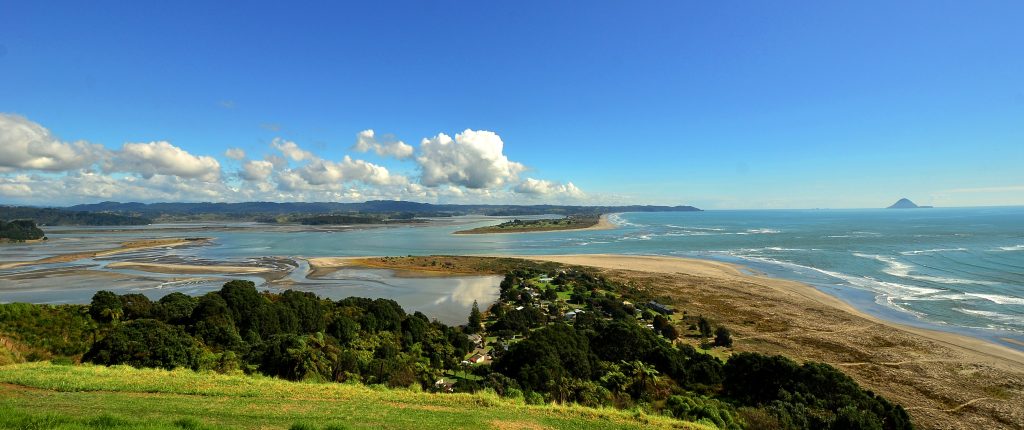

The Ōhiwa Headland Sanctuary Trust is a community-led initiative that aims to restore the natural character of the ‘Ōhiwa Headland’ (1500-ha) in conjunction with our local community, to create a ‘sanctuary’ where native species flourish. Our operational area is bordered by estuaries on the east and west, as well as the Pacific Sea to the north. State Highway 2 on the southern boundary connects the town of Ōpōtiki to Whakatāne. This geographically defendable site makes it entirely feasible to reduce animal pests to low-levels and minimise their re-invasion back into the area. We are the largest community-led environmental restoration programme in the Ōpōtiki District, working with over 160 landowners and also supporting five neighbouring Care Groups in the area by joining the dots to achieve landscape-scale environmental management.
Objectives
To work in conjunction with our community, landowners, neighbouring care groups and stakeholders across the Ōhiwa Headland to:
• Manage animal pests to low levels to reduce their threat to native fauna and flora and enable these populations to flourish.
• Reduce possums to zero-density and minimise their re-invasion into the area.
• Manage high priority plant pests (woolly nightshade, ginger, wilding pine) to reduce their impact on the native ecosystem.
• Increase native habitat through restoration planting.
• Create a sanctuary for national, regional and locally endangered species and restore the natural heritage once representative of the Ōhiwa Headland ecosystem.
• Promote awareness of the special natural heritage values of the Ōhiwa Headland and advocate for the protection of those values.
• Carry out education or research into conservation and restoration of New Zealand’s natural heritage, and dispense knowledge and methodologies gained to conservation elsewhere in New Zealand.
How to Help
- Volunteers can assist with a range of work from predator trapping, assisting with data entry, helping out at planting sessions to increase native habitat, pest plant control, monitoring work as it occurs.
- We are always on the lookout for enthusiastic trappers in particular!